


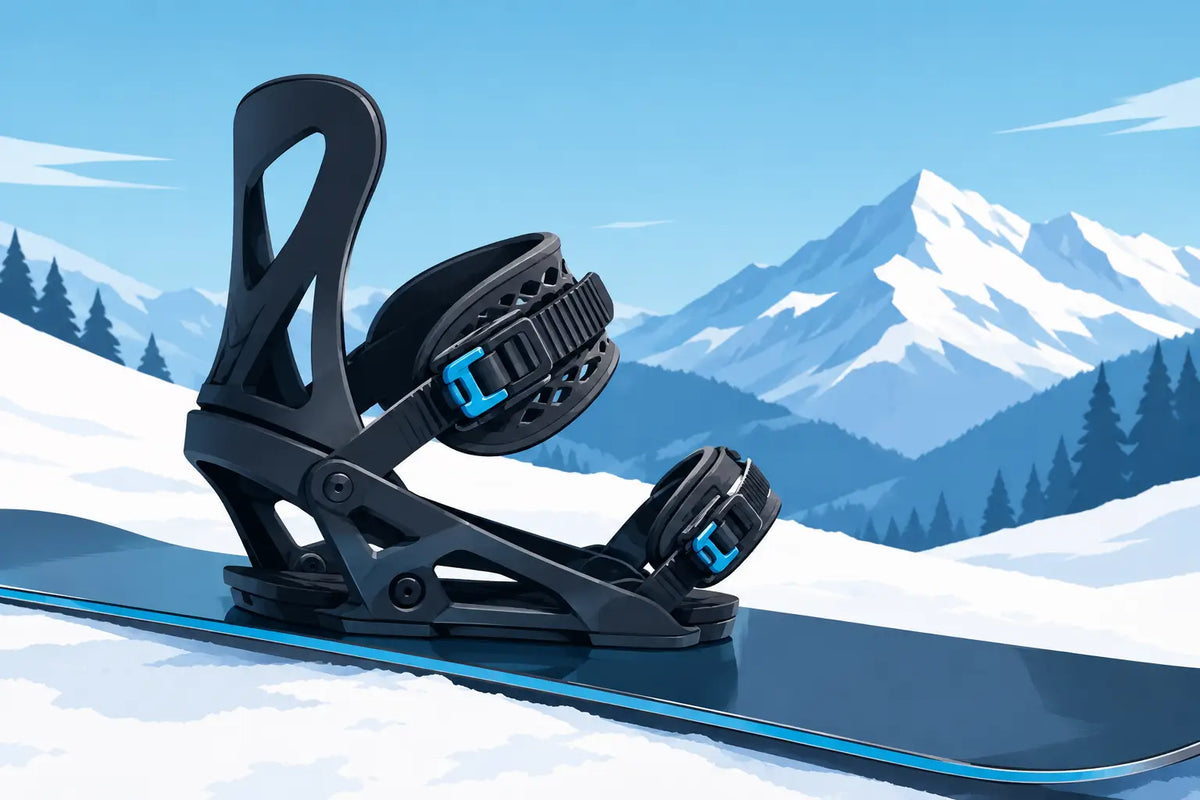
A binding that's too flexible on a responsive board quickly gives the impression of losing a fraction of a second with each release. That's where the search for...reviews of responsive snowboard bindings They become truly meaningful: a responsive binding doesn't just promise more precision, it changes the way energy is transferred from the boots to the edge. On firm morning slopes, in a challenging line, or during a series of fast turns, this difference is immediately noticeable.
But "responsive" doesn't automatically mean "better." The right level of response depends on your technique, your boots, your board, and above all, what you like to ride. A very direct binding can be excellent for speeding up transitions, but tiring or unforgiving if you're primarily looking for comfort and playfulness.
What does a responsive snowboard binding mean?
Responsiveness refers to the speed and precision with which a binding transmits your movements to the board. When you engage your shins and ankles to transition to a frontside or backside edge, a responsive binding minimizes movement loss. The board responds more quickly, with a crisper feel.
This feeling comes from several elements. The spoiler, or highback, is often stiffer and offers better support. The base further limits lateral torsion. The straps hold the foot securely without any loose points, while the chassis creates a more direct connection between the boot and the board. Therefore, it's not a single component that makes for a precise binding, but the balance of the entire system.
On hard snow, this quick response helps you set your edge cleanly before the piste slips away. In freeriding, it provides support when the terrain demands immediate weight transfers. However, for buttering, flatland riding, or absorbing landings with a lot of freedom, a very stiff binding can feel less natural.
Reviews of responsive snowboard bindings: for which riders?
Responsive bindings are primarily aimed at advanced intermediate and expert riders who already have relatively precise control. They are particularly suitable for those who like to carve, pick up speed, explore the edges of the piste, ride in couloirs, or use a responsive directional board.
They are also well-suited for a powerful rider. If you load the front of the board heavily, if you steer your turns with your legs rather than sliding, a soft binding is likely to saturate. It will then absorb some of the energy instead of transferring it into the turn.
Conversely, a beginner doesn't always benefit from starting with the most responsive binding. A medium flex binding generally provides sufficient control while allowing for some margin of error in weight distribution. It facilitates learning to skid, traverse, and make initial off-piste excursions easier without imposing overly demanding skiing techniques.
For a freestyle rider, the choice depends on the riding style. A responsive binding can be useful for big kickers, fast landings, and challenging park terrain. For rails, flat rotations, and creative riding, a medium or medium-soft flex often offers more flexibility. Therefore, the best advice isn't necessarily based on simply classifying a binding as "high-performance," but rather on specifying where and how it will be used.
Flexibility: a useful guideline, not an absolute truth
Brands often use a flex scale from 1 to 10. In practice, a binding around 6 or 7 out of 10 falls into the versatile and dynamic range. From 8 onwards, you generally enter a binding designed for more aggressive skiing. However, be aware that these scales are not standardized. A 7 from one brand may feel stiffer than an 8 from another.
The flex of the spoiler gives a good indication, but it doesn't tell the whole story. A binding might have a firm highback and a slightly flexible baseplate, providing support in turns while maintaining some lateral freedom. Another might seem stiff on paper but offer significant cushioning underfoot and soft straps. Try to understand the overall character of the model rather than focusing solely on a single number.
The relationship with your board is just as important. A flexible board mounted with very stiff bindings can become unbalanced: the bindings demand precision, while the board flexes easily. Conversely, a stiff freeride board will lose its potential with bindings that are too soft. A well-balanced setup provides more control than a single high-end component.
The details that truly make the difference
The spoiler is the first thing to examine. A tall, stiff model with good forward tilt adjustment speeds up heel-side roll-out. This is great for carving and wide turns, but excessive tilt can cause constant pressure on your calves. Start with a moderate tilt, then adjust after a few runs.
The base affects energy transfer and the feel underfoot. A solid base provides precise handling, while a cushioned footbed reduces vibrations and shocks on rough terrain or upon landing. The trade-off is clear: more cushioning may slightly dampen the feedback from the terrain, but it protects the joints during long days.
The straps deserve the same attention. They should lock the boot in place without being overtightened. A good ankle strap distributes pressure across the top of the foot; a well-positioned toe strap holds the toes without crushing the front of the boot. If you have to force the buckles to prevent your foot from moving, the problem often lies with the size, centering, or boot-binding compatibility.
Finally, consider the adjustment options: heelcup position, boot centering on the board, spoiler rotation, and strap angle. Two bindings with a similar flex can offer very different feel once adjusted. A precise but poorly centered binding will cause toe drag or heel drag, disrupt edge pressure, and negate the entire purpose of its design.
Boots and bindings: the essential pairing
A soft boot in a very stiff binding often creates a vague response. Your energy is first lost in the boot's deformation before reaching the binding. Conversely, a very firm boot with a soft binding can give a feeling of lag: the foot is held, but the baseplate and spoiler don't follow with the same precision.
For responsive riding, look for similar flex levels. A medium-stiff boot with a medium-stiff binding is a versatile and reliable setup. A stiff boot with a firm binding is better suited to fast freeriding, challenging slopes, and riders who like to push their limits. Your weight also matters: a lighter rider might find a binding advertised as medium-stiff already very firm, while a heavier rider will experience it differently.
Boot size is crucial. A boot that extends too far beyond the base increases the risk of hitting the snow at an angle. A binding that is too large allows the foot to move around, even with tight straps. At the storeTake the time to put on your own boots, place them in the binding and check the actual centering, not just the size indicated on the label.
Adjustments to make before judging a binding
Many negative reviews stem from improper adjustment rather than the binding itself. Start by centering the boot between the two edges. The goal is for the toe and heel overhang to be balanced, taking into account the width of your board and your ski angles.
Next, adjust the spoiler so it follows the axis of your boot's heel. A slight rotation often improves comfort and power transmission on the backside edge. For the forward lean, start from a neutral or slight position. Increase it only if you want a more immediate heel response and to keep your calves relaxed.
The straps should be centered on the boot. The ankle strap covers the support area without overlapping the top of the foot; the toe strap goes on the end of the boot, not flat on the toes. Do a few runs, then adjust. A good setup is noticeable when you forget about the bindings and the board responds without any unwanted effort.
Field testing matters more than the technical specifications.
In Verbier, conditions change rapidly, from a groomed piste at the start to transformed snow by midday and more technical sections off the main runs. It's precisely in these variations that a binding reveals its character. Observe the speed of edge-to-edge transitions, the stability under compression, foot fatigue, and your ability to maintain mobility when the terrain deteriorates.
If you hesitate between two levels of flexPrioritize the setup that suits 80% of your riding days, not your ideal run of the season. A highly responsive binding is an excellent tool when it complements your riding style. When chosen and properly adjusted, it provides that simple, sought-after feeling: thinking about the turn, and feeling the board go for it.


